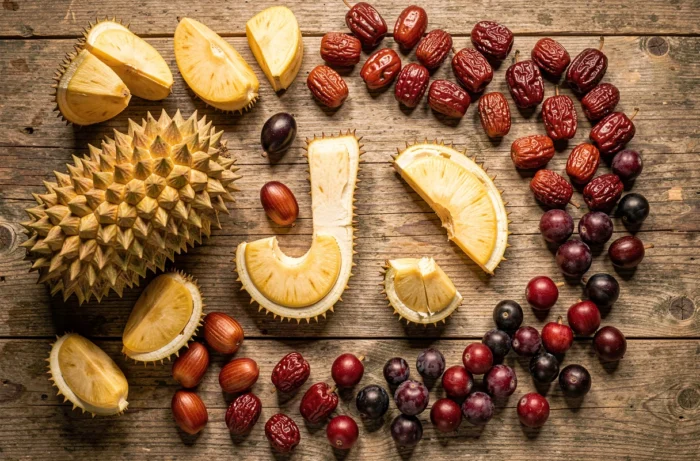
Fruits starting with the letter J form a small group in the French language. There are mainly four to five, depending on whether one includes Latin names or regional designations. Their rarity in European markets does not reflect their nutritional interest or botanical diversity: these fruits come from very different geographical areas, from Brazil to South Asia, and present unique flavor profiles among common fruits.
Why so few fruits starting with J in French
The letter J is one of the least represented in the fruit nomenclature of the French language. The reason lies in the origin of the names: most fruits cultivated in Europe have Latin, Greek, or Arabic roots where the initial J is rare. The few fruits in J in French are direct borrowings from Indigenous languages (tupi for jaboticaba), Malay (jamalac), or Chinese (jujube).
This linguistic rarity has a practical consequence: during a game like “petit bac,” finding a fruit starting with J represents a real advantage. Knowing just two or three names from this list of fruits with the letter j is enough to stand out.
Jujube: an ancient fruit tested in cultivation in southern France
The jujube is the fruit of the jujube tree (Ziziphus jujuba), a tree native to China that has been cultivated for thousands of years in Asia and around the Mediterranean. The fruit resembles a small date in its elongated shape and brown-red color when ripe. Its flesh is crunchy when fresh, then becomes soft when dried, earning it the nickname “Chinese date.”
Farmers in southern France have been testing its cultivation since the 2010s, in a context of seeking crops adapted to climate change. The main challenge in a cool climate is not limited to resistance to winter cold: summer heat conditions the ripening of the fruits.
A very sunny and sheltered exposure from the wind remains the condition for obtaining a harvest, generally from late summer to autumn depending on the variety.
Recognizing a ripe jujube
Fresh, the jujube has a smooth skin that changes from green to yellow, then to red-brown. The white or greenish flesh resembles the texture of an apple. Once dried, the fruit wrinkles and takes on a more concentrated, sweet flavor, close to that of a date. Both forms are consumable, but the flavor profiles differ significantly.
Jackfruit, jaboticaba, jamalac: three tropical fruits to distinguish
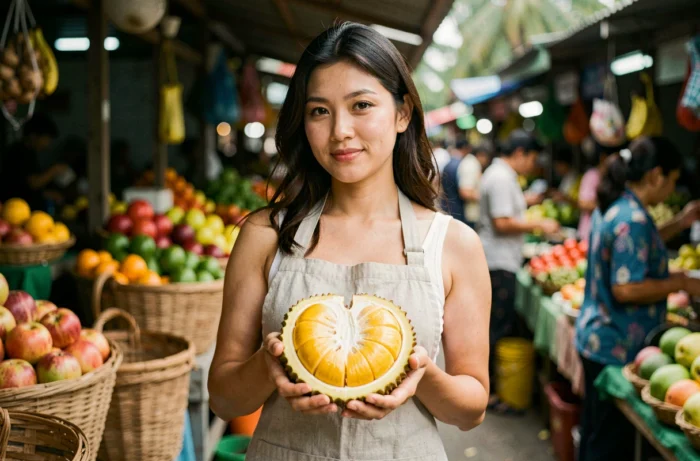
The jackfruit (or jack tree fruit) is the largest fruit borne by a tree. Native to India and Bangladesh, it is recognized by its thick skin covered with small spikes and its yellow flesh divided into segments. Each segment contains an edible seed. The taste hesitates between mango and pineapple, with a fibrous texture.
The Indian jackfruit sector is developing new outlets beyond the consumption of fresh fruit. Trials focus on valorizing the seeds into plant products and using the skin as an alternative material. Processing, storage, and traceability are part of the development axes of this sector.
Jaboticaba: the fruit that grows on the trunk
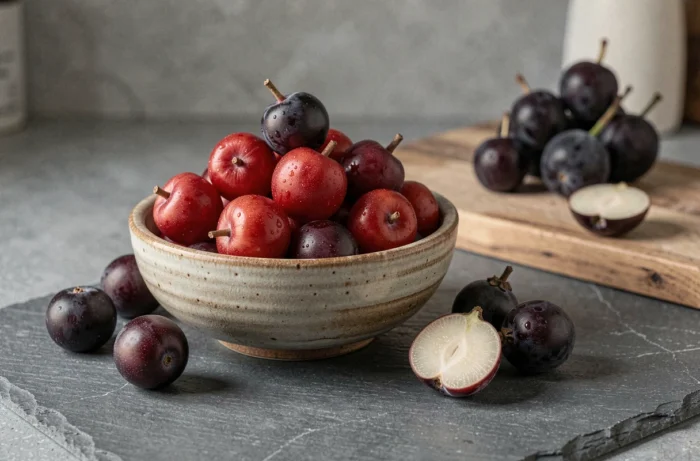
The jaboticaba is a small round fruit, dark purple to black, native to Brazil. Its most striking botanical feature: it grows directly on the trunk and branches of the tree, not at the ends of branches. The white and translucent flesh offers a sweet-tart flavor reminiscent of muscat grapes.
Its fragility after harvest limits its marketing outside production areas. In the refrigerator, jaboticaba lasts about three to five days. Freezing extends this duration but alters the texture of the fruit, which is then more suitable for preparations (juices, jams, liqueurs).
Jamalac: the water apple
The jamalac (Syzygium samarangense), sometimes called water apple or red jambose, is a bell-shaped fruit, bright red when ripe. Its white flesh is juicy, slightly sweet, with a crunchy texture similar to watermelon. Native to Southeast Asia, it is mainly consumed fresh.
Summary table of fruits starting with J
| Fruit | Origin | Appearance | Taste and texture |
|---|---|---|---|
| Jujube | China, Mediterranean | Small, oval, brown-red | Crunchy fresh, soft dry, sweet |
| Jackfruit | India, Bangladesh | Very large, spiky skin, yellow flesh | Sweet, fibrous, between mango and pineapple |
| Jaboticaba | Brazil | Small, round, dark purple-black, grows on the trunk | Sweet-tart, close to muscat grape |
| Jamalac | Southeast Asia | Bell-shaped, bright red | Juicy, light, crunchy |
Jocote and jambose: two names sometimes added to the list
Some sources mention jocote, a small stone fruit from Central America (Spondias purpurea), with red or yellow skin and tart flesh. It remains very little known in Europe and rarely appears in French references.
The jambose (or rose apple, Syzygium jambos) is often confused with the jamalac. Both belong to the Myrtaceae family, but the jambose has a rounder shape and a pronounced rose fragrance. This botanical proximity explains the variations from one list to another.
- The jujube and jackfruit are the two most documented and accessible fruits in J, even in Europe, in dried or canned form.
- The jaboticaba remains confined to Brazilian markets and a few specialty stores, due to its very short shelf life after harvest.
- The jamalac, jocote, and jambose are found almost exclusively in their tropical production areas.
The group of fruits starting with J remains limited to four or five solid entries in French, depending on the boundaries set for names and regional variations. Their diversity of geographical origins, textures, and consumption methods makes them a richer subject than it may seem at first glance based solely on the letter.