
What levers distinguish a supported entrepreneur from an isolated entrepreneur in terms of sustainability and skill development? The GEM France 2025-2026 report describes an entrepreneurial dynamic that is recovering, but characterized as “fragile and unevenly distributed” across the territory. Three priorities emerge: strengthening entrepreneurial culture from secondary school, easing administrative constraints, and better supporting those who start businesses out of necessity. It is in this context that specialized platforms are structuring their offerings to address these specific challenges.
Entrepreneur support and ACRE reform 2026: what changes concretely
As of January 1, 2026, ACRE (aid for business creation or takeover) is no longer automatically granted. The creator must now submit an explicit application, which changes the game for all project leaders who were counting on this temporary exemption from social contributions without any specific steps.
This regulatory change creates a direct risk: a poorly informed entrepreneur may lose this financial advantage due to simple administrative omission. Support for the creation steps then takes on a new operational dimension. Knowing the application timeline, required documents, and eligibility conditions becomes a prerequisite, not a bonus.
By relying on the services offered by Culture Entrepreneur, a project leader gains access to support that integrates these regulatory developments into a structured journey, from concept validation to the first tax and social steps.

Comparison of entrepreneurial support pillars: training, coaching, and networking
Support offerings are distinguished along three axes. The table below summarizes the characteristics of each to clarify their respective contributions.
| Pillar | Main objective | Common format | Impact on success |
|---|---|---|---|
| Training (technical skills) | Acquire targeted know-how (management, marketing, taxation) | Online modules, in-person workshops | Reduction of management errors during the startup phase |
| Individual coaching | Align personal vision and business strategy | Regular sessions with a mentor or coach | Better decision-making under pressure |
| Networking and connections | Access to partners, clients, or funders | Events, online communities, clubs | Acceleration of business development |
A support program that combines these three pillars into a coherent journey produces different results from a fragmented approach where the entrepreneur picks a module here, a workshop there. The alignment between acquired skills, leadership posture, and professional connections creates a leverage effect that each isolated component cannot generate.
Entrepreneurial culture and team engagement: an underestimated link
Entrepreneurial culture is not just about the founder. In a growing company, it permeates how teams take initiatives, manage internal processes, and interact with clients.
Three indicators allow for measuring this diffusion:
- The level of decision-making autonomy of employees within their scope, reflecting the trust granted by the manager
- The frequency of innovation proposals put forward by teams, a sign of an environment where mistakes are tolerated
- The cohesion between the values displayed by the company and the behaviors observed daily, often revealing a cultural problem
The alignment between declared values and actual practices determines the credibility of the entrepreneurial project in the eyes of both teams and partners. A visible gap between discourse and actions generates disengagement, regardless of the sector.
Recruitment and company culture: a filter from hiring
Recruitment is the first test of cultural coherence. A process that evaluates only technical skills without checking alignment with the organization’s values produces technically proficient but culturally fragmented teams.
Companies that integrate a “cultural alignment” aspect into their interviews see a significant reduction in turnover in the first year. The cost of a failed hire (training, integration, replacement) far exceeds that of a more thorough selection process upfront.
Continuous training and skill development: the blind spots of entrepreneurs
Most creators invest in training at the launch stage, then drastically slow down once the business is operational. This interruption often coincides with the period when skill needs diversify the most: management, negotiation, financial steering, commercial strategy.
The Bpifrance Création 2026 training catalog illustrates this trend: the modules now cover transversal themes (collective intelligence, crisis management, digital transition) that did not exist in programs a few years ago. Entrepreneurial training is no longer limited to the business plan but encompasses a spectrum of skills that evolves with the life cycle of the company.
- Creation phase: validation of the business model, administrative formalities (including the new ACRE procedure), first management tools
- Growth phase: recruitment, structuring processes, business development, customer loyalty
- Maturity phase: product innovation, diversification, transmission or sale
Relevant support adapts to each of these phases rather than offering a generic program identical for all profiles.
Collective intelligence and entrepreneurial performance
Entrepreneurs who participate in peer groups progress faster than those who work in silos. Sharing experiences among leaders facing similar issues accelerates problem-solving and reduces feelings of isolation, a major factor in abandonment during the first year of activity.
These collective dynamics complement individual coaching by providing a diversity of perspectives that the sole coach-entrepreneur duo cannot offer.
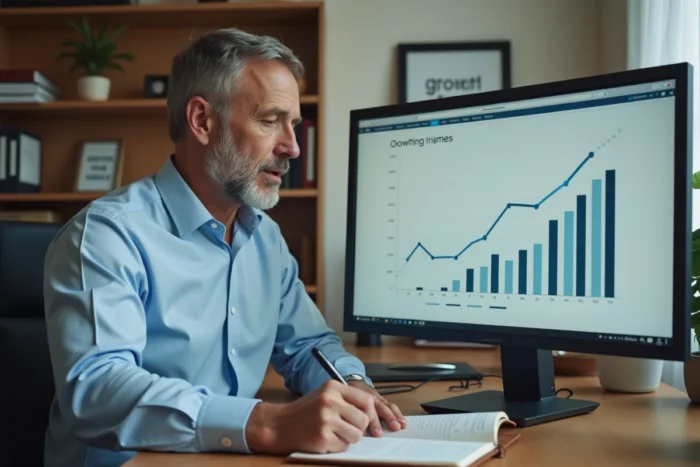
The recovery of entrepreneurial activity in France is accompanied by more precise support needs, driven by regulatory changes such as the ACRE reform and an increased demand for coherence between training, company culture, and performance. Structures that articulate these dimensions in a journey tailored to each development phase meet a demand that fragmented approaches leave unanswered.