
A lawn mowing quote is based on a seemingly simple calculation: an area multiplied by a unit rate. In practice, the final bill depends on variables that the square meter alone does not capture. Understanding these variables allows for comparing quotes on a real basis and avoiding unexplained price discrepancies.
Land Constraints and the Real Cost of Mowing
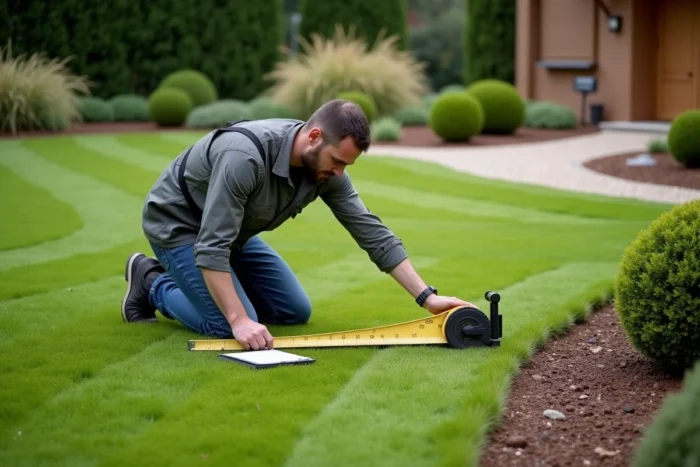
The area to be mowed sets the basis for the quote, but two gardens of identical size can generate very different rates. The terrain’s relief, the shape of the plot, and the obstacles present modify the working time, thus affecting the cost.
A sloped terrain requires slower passes and sometimes the use of specific equipment (self-propelled mower, brush cutter on steep areas). A plot divided into several zones, with flower beds, trees, or a play area, forces the provider to multiply maneuvers and edge finishes.
Estimating the price of a lawn mowing quote therefore requires detailing the layout of the land, not just its surface area. A serious gardener will request a prior visit or, at the very least, photos before providing a quote.
- A flat and clear terrain is mowed faster than a partitioned terrain, even with the same surface area, which directly reflects on the hourly rate charged.
- The height of the grass at the time of the intervention matters: a regularly maintained lawn requires fewer passes than grass left unattended for several weeks.
- Accessibility also plays a role: if the gardener has to cross the house or use a narrow passage to access the garden, the setup time increases.

Hourly Rate or Rate per Square Meter: What Each Billing Method Reveals
Professionals charge for mowing based on two logics. The rate per square meter is suitable for large, regular surfaces: the client knows in advance how much they will pay, and the gardener optimizes their visit with wide equipment.
The hourly rate is more applicable to small gardens or complex terrains. It protects the provider against unforeseen circumstances (wet soil, tall grass, unreported obstacles). For the client, the risk is seeing the bill rise if the job takes longer than expected.
A transparent quote always indicates the chosen calculation method. If the rate is hourly, check that the estimated number of hours is clearly stated. If the rate is per square meter, ensure that the area has been measured or estimated on a plan, not rounded off loosely.
Additional Services on the Quote
Mowing alone covers the passage of the mower and, depending on the providers, the collection of the cut grass. Edge finishes, clearing inaccessible areas for the mower, or trimming adjacent hedges are charged extra.
Reading each line of the quote avoids surprises. An abnormally low mowing rate may hide absent maintenance services that you will have to pay for separately or do yourself.
Annual Maintenance Contract: The Price Negotiation Lever
Signing an annual maintenance contract with a gardener reduces the unit cost of each visit. The professional secures a volume of work for the season (generally from spring to the first frosts), and the client benefits from a smooth rate.
This type of contract specifies the frequency of mowings, the included services, and the projected schedule. It also allows for the integration of additional services (scarification, reseeding) at a bundled price.
An annual contract has another rarely mentioned advantage: the regularity of mowings keeps the grass short, which shortens each intervention. The gardener gains in productivity, and this gain reflects on the overall rate.
Heatwave Episodes and Impact on the Mowing Quote
Since the strengthening of measures to prevent risks related to high heat, gardening professionals must adapt their working conditions during heatwaves. Obligations include shifting mowing slots (early in the morning or late in the day), additional breaks, and, in the case of orange or red vigilance, a possible postponement of the intervention.
These constraints extend the actual duration of the job or impose rescheduling. A quote established in the middle of summer may include a surcharge related to these schedule adjustments, which standard pricing grids do not reflect.
If you compare quotes received in spring with others obtained in July, this price difference is not necessarily a sign of overcharging. Ask the provider to detail any adjustments related to weather conditions.
Tax Credit and Personal Services: Real Cost Reduction
Hiring a certified “personal service” company or using the Cesu provides a 50% tax reduction on gardening maintenance expenses. This mechanism halves the net cost of mowing for the individual.
To benefit from this, the provider must have the corresponding certification, and the work must fall within the scope of personal services (small gardening tasks). The annual ceiling of eligible expenses is regulated by tax legislation.
Comparing two quotes without considering the tax credit skews the analysis. A certified gardener whose gross rate seems higher than that of a non-certified provider may end up being cheaper after tax deduction. Always check the professional’s status before signing.
The final price of a lawn mowing depends as much on the layout of the land as on the chosen billing method and the tax status of the provider. Reading each line of the quote, verifying the certification, and comparing on a net basis after tax credit remain the three most reliable reflexes to avoid overpaying for a common service.