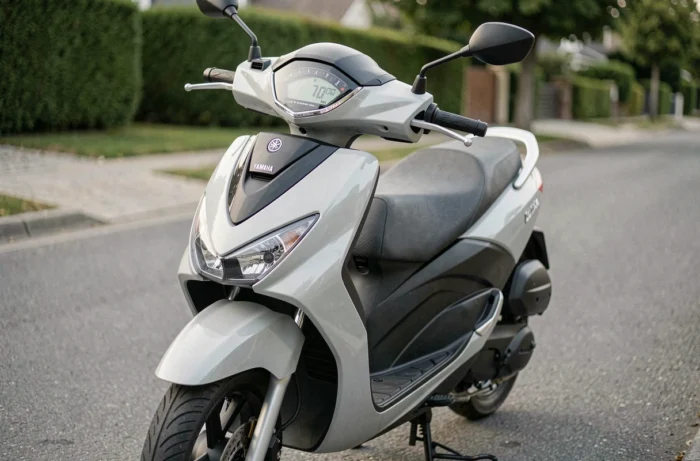
The Yamaha XMAX 125 displays around 115 km/h on the speedometer after the break-in period, which translates to about 95 km/h in actual GPS speed on flat ground. After 10,000 km, the measured gain remains modest, around a few km/h on GPS. This mechanical reality deserves to be analyzed beyond the subjective impressions found on forums.
Speedometer and GPS discrepancy on the XMAX 125: the bias that skews all comparisons
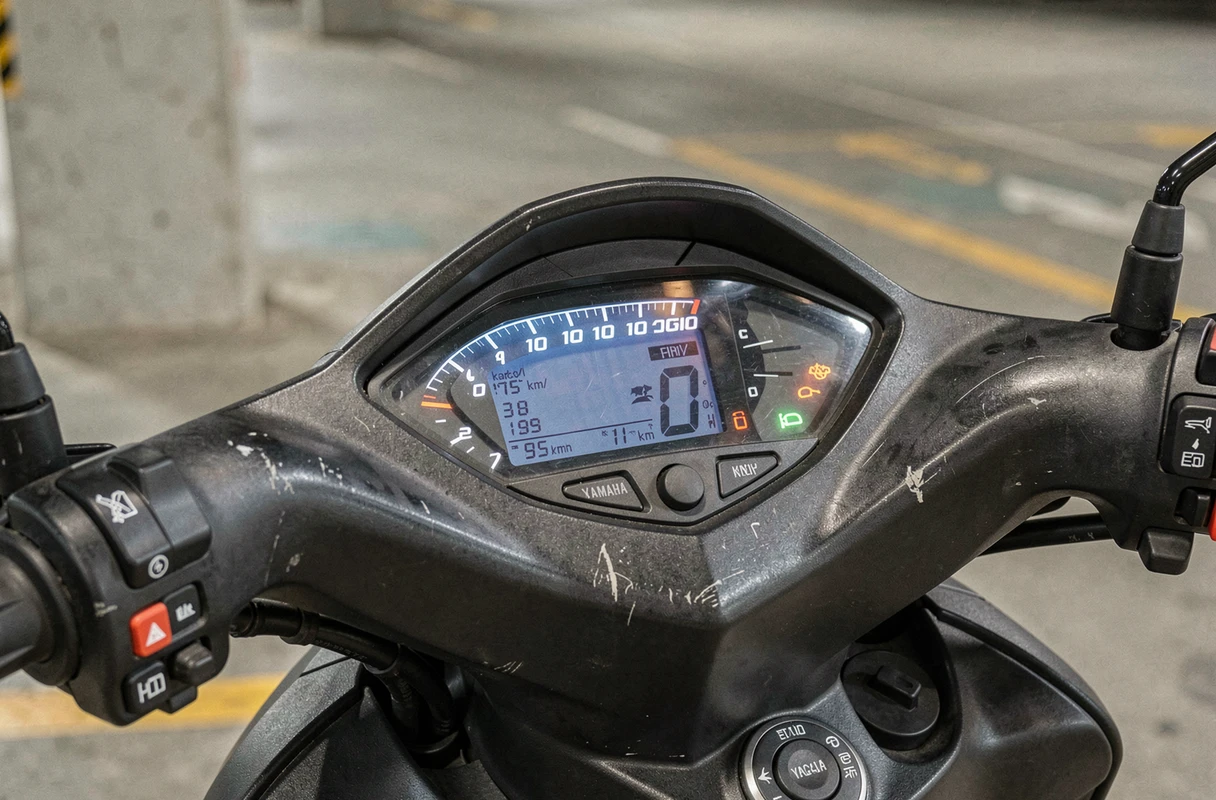
Before discussing speed evolution between break-in and advanced mileage, we must address a problem that most online feedback ignores: the speedometer/GPS discrepancy exceeds 10 km/h above 100 km/h displayed. An XMAX 125 indicating 115 to 120 km/h actually travels between 103 and 108 km/h on GPS.
This overestimation of the speedometer is in line with European regulations, which require that the displayed speed is always greater than or equal to the actual speed. The problem arises when an owner compares their speed “during break-in” and their speed “after 10,000 km” without using the same measuring tool.
A user who reads 110 km/h on the speedometer during break-in, then 118 km/h six months later, may believe they have gained 8 km/h. On GPS, the actual difference often drops to 3 or 4 km/h. Without systematic GPS measurement, the maximum speed differences of the XMAX 125 after break-in remain open to interpretation.
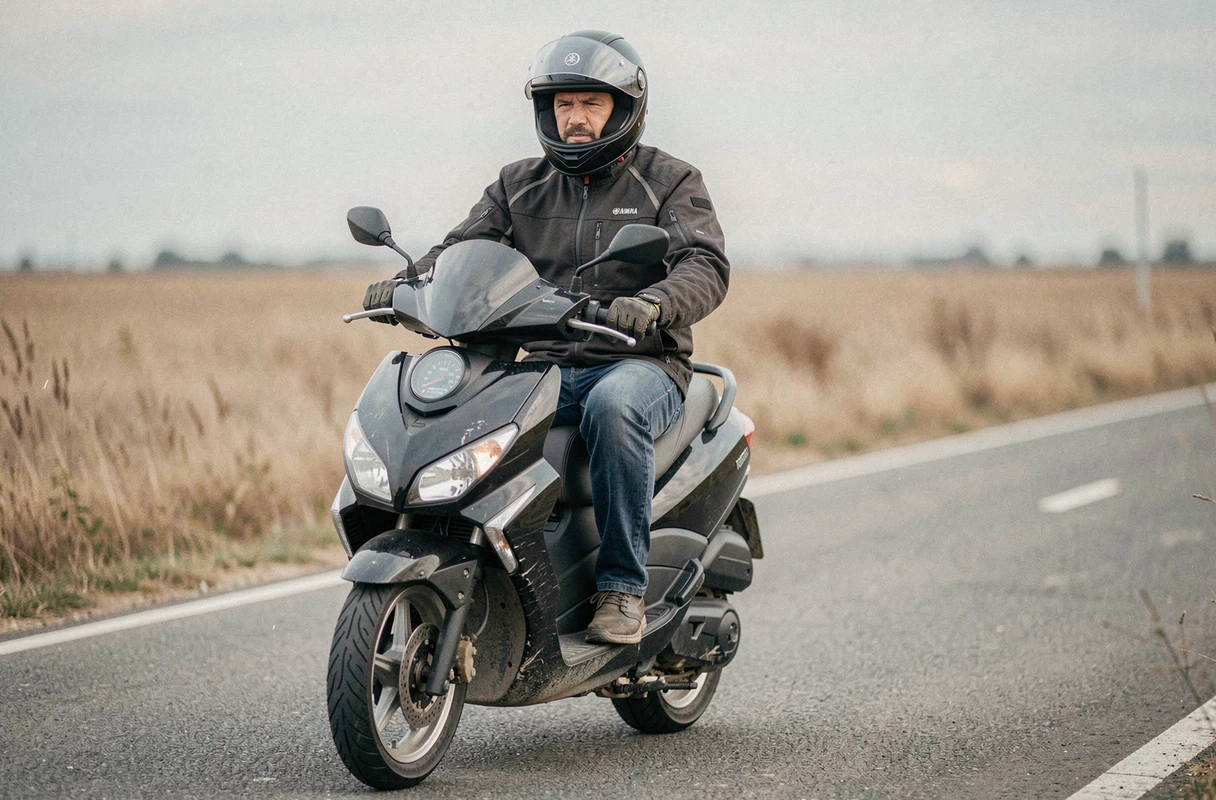
Maximum speed of the XMAX 125 during break-in: what the segments and variator impose
Yamaha recommends not pushing the engine to full throttle during the first 1,000 kilometers. This guideline protects the adjustment of the segments on the cylinder, the seating of the valve seats, and the break-in of the variator transmission.
During this period, the usable top speed generally lies between 100 and 110 km/h on the speedometer. The XMAX 125’s 4-stroke single-cylinder engine delivers its power progressively, and the variator does not yet reach its optimal positions until the rollers have found their definitive trajectory in the movable face.
Variator rollers and shaping
New rollers have a slightly rough surface that creates micro-friction in the variator ramp. After a few hundred kilometers, this surface smooths out. The variator then climbs more decisively into the higher gears, resulting in a slightly lower engine speed at the same speed, or a few extra km/h at the same engine speed.
The break-in of the variator is as important as that of the engine for the top speed of a CVT scooter. Neglecting the alternation of engine speeds during the first kilometers can delay this shaping and falsely suggest that the scooter “is not revving up.”
After 10,000 km: the performance plateau of the XMAX 125
Beyond the break-in, the XMAX 125 reaches a plateau. We observe on GPS readings a stabilized top speed around 105 to 108 km/h in actual speed on flat ground, with no wind and a solo rider. This figure no longer progresses significantly, even at 15,000 or 20,000 km.
The reason is structural: a 125 cm³ homologated A1 remains limited by its displacement, its regulatory power, and the development of its variator. A perfect break-in will not change the nature of the engine. The total gain between a new XMAX limited by the caution of the break-in and the same XMAX at 10,000 km amounts to a few km/h, not a radical transformation.
Variables that weigh more than mileage
Once past the break-in phase, several factors influence top speed more than the natural wear of the engine:
- The load carried: a passenger and saddlebags significantly reduce maximum speed more than any break-in/post-break-in discrepancy. The XMAX easily loses several km/h on GPS with a passenger on board.
- Headwind: on a scooter whose top speed is around 105 km/h, a strong headwind can subtract 5 to 10 km/h in actual speed, making any before/after break-in comparison irrelevant if conditions were not identical.
- The condition of the air filter and the quality of the engine oil: a clogged filter or degraded oil reduces the available power at high revs, which compensates for or even cancels out the mechanical gain achieved through break-in.
- Tire pressure: under-inflated tires increase rolling resistance and hinder speed increase in the last few km/h.
Maintenance of the XMAX 125 and maintaining top speed after break-in
A well-maintained XMAX at 10,000 km rides as fast as at 3,000 km. However, neglected maintenance can create the illusion that the scooter “has lost speed” when the engine has not lost any of its potential.
Replacing the variator rollers deserves special attention. With mileage, the rollers wear out and lose weight, which alters the transmission ratio. A set of worn rollers can cause the engine to rev higher without a speed gain, or even with a loss. Replacing them at the interval recommended by Yamaha restores the original behavior.
The spark plug, often forgotten, also plays a role in achieving full power at high revs. A dirty spark plug or one with degraded gap reduces combustion quality and eats away at the last available horsepower, precisely those that make the difference between 103 and 108 km/h on GPS.
The XMAX 125 is not a scooter whose top speed evolves continuously with mileage. The gain post-break-in is real but capped by the 125 cm³ category. It is better to focus on regular maintenance than to hope for a gradual unlocking of power. A clean filter, fresh oil, and rollers in good condition contribute more to top speed than a five-digit odometer.