
Every summer, the same scene unfolds in front of the wardrobe: we hesitate between comfort and style, between a clingy fabric and an outfit too formal for the temperature. The choice of pieces to wear when it’s hot relies on a few simple principles, but their combination makes all the difference. Linen, cotton, loose cuts, light colors: these words are everywhere.
The real challenge lies in assembling these elements without looking like everyone else, and especially without suffering from the heat by midday.
Clothing and Nighttime Heat: A Health Angle Often Overlooked
Have you ever noticed that fatigue accumulates faster in summer, even without any particular effort? Part of the explanation lies in the nights. French health recommendations now emphasize managing nighttime heat, advocating for loose nightwear made from natural fibers like cotton or linen.
Synthetic materials retain more sweat and body heat. The result: the body struggles to cool down, sleep becomes fragmented, and the following day starts with a recovery deficit.
Specifically, a loose cotton pajama or a simple oversized linen t-shirt can change the game. Some public health guides even mention using a wet cloth placed on the skin or a slightly damp t-shirt to speed up cooling before falling asleep. This reflex, validated by ARS Île-de-France and WHO, is particularly aimed at vulnerable individuals or those working outdoors.
Choosing your summer outfit is therefore not limited to daytime style. The question of what to wear when it’s hot starts at bedtime, because poor quality sleep also shows on your face and affects your energy the next day.
Choosing a Summer Fabric: The Touch Test Before the Label
Before reading the composition on the label, one gesture is enough. Take the fabric between your fingers and press it against your palm. If it is soft, crinkles slightly, and does not cling to the skin, there is a good chance it is breathable.
Linen remains the absolute reference. It allows air to circulate, dries quickly, and withstands repeated washes without losing its properties. Fine cotton (cotton voile, lightweight poplin) absorbs sweat and maintains a pleasant touch all day long. Lyocell, less known, offers a fluid drape and natural thermal regulation that makes it suitable for light dresses and shirts.
In contrast, certain materials can turn an afternoon into a trial:
- Polyester and nylon trap heat against the skin and promote sweat odors, even in airy cuts.
- Pure elastane (without a cotton blend) clings to the body and prevents any air circulation.
- Coated or waterproofed fabrics, sometimes found in lightweight jackets or technical pants, completely block evaporation.
The reflex to remember: a breathable fabric is recognized by touch before it is read on a label.
Light Colors and Summer Outfits: Beyond White
French health authorities classify wearing light-colored clothing among public health measures during heatwaves, alongside hydration. A white or beige fabric reflects a large portion of solar radiation, while a deep black absorbs almost all of it. The surface of the garment heats less, and so does the skin.
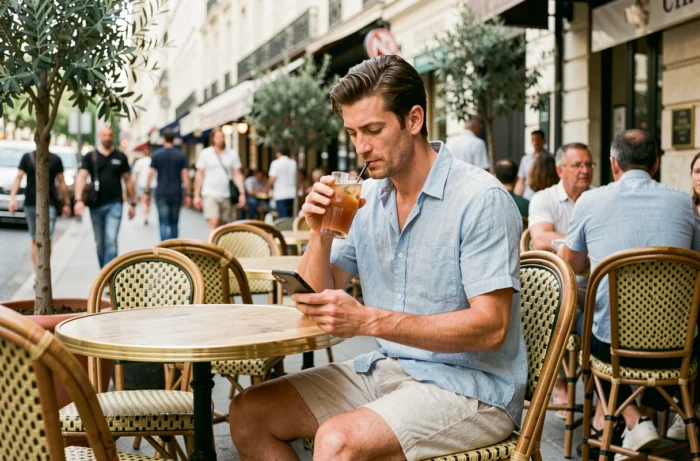
Wearing white all summer is not the only option. Sand, sky blue, water green, or powder pink offer the same light reflection capacity with more personality. A linen-colored pant paired with a pastel blue shirt creates a summer outfit that is both fresh and structured, suitable for both a terrace lunch and an air-conditioned office.
The common pitfall: choosing a light color on a dark synthetic fabric with a lining. The color never compensates for an unsuitable material. A black linen t-shirt will breathe better than a white polyester polo.

Loose Cuts and Summer Fashion: Pieces That Change Comfort
A garment slightly away from the skin creates a thin cushion of air that circulates with every movement. This simple principle explains why a flowing dress or wide cotton pants provide a feeling of freshness that the thinnest slim jeans can never offer.
Some pieces deserve a priority place in the summer wardrobe:
- The flowing long dress in viscose or linen, worn without a belt, allows air to rise along the body. It works from the morning market to an outdoor dinner.
- The wide lightweight cotton pants (palazzo style or structured beach pants) replace jeans without sacrificing style. Rolled at the ankle, they pair well with flat sandals.
- The oversized linen shirt, worn open over a tank top or buttoned with rolled-up sleeves, remains the most versatile piece of summer.
- The thick cotton bermuda shorts, cut above the knee, offer a dressier alternative to sports shorts for men.
Are you hesitating between short and long sleeves? On a breathable fabric, a slightly rolled long sleeve protects from the sun without adding noticeable heat. This is why the long-sleeved linen shirt remains a classic in hot countries.
Sun, Accessories, and Common Mistakes in Summer
A wide-brimmed hat protects the face and neck better than any hastily applied cream. Made of straw or woven cotton, it allows air to pass while blocking direct radiation. Sunglasses complement this protection with no direct relation to fashion, but with a real impact on visual comfort and fatigue.
For shoes, open leather sandals remain the most breathable choice. Cotton canvas sneakers work for active days, provided you avoid models lined with synthetic materials. Espadrilles, lightweight and easy to slip on, are suitable for casual outings.
The most common mistake is to layer too many thin layers thinking that lightness adds up. Two layers of thin fabric are equivalent to one layer of thick fabric in terms of heat retention. It’s better to have one well-chosen piece than a stack of basics.
One last often-forgotten detail: loose clothing, made of cotton or linen, and in light colors are now classified by French health authorities among the health prevention measures during heatwaves. Dressing lightly this summer is not just a matter of style; it’s also a concrete choice for well-being, from morning to bedtime.