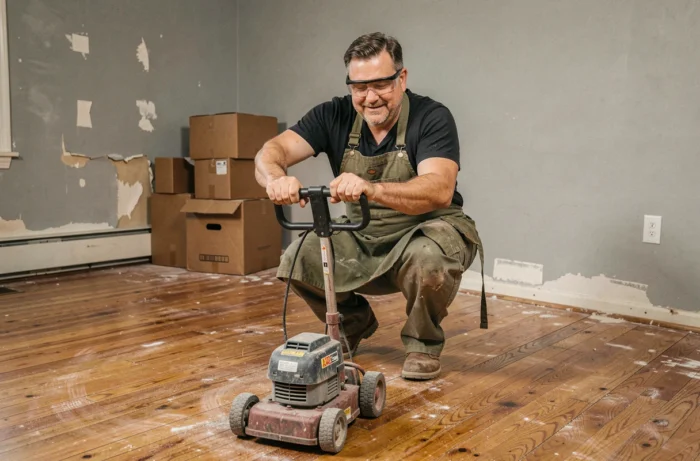
Sanding a floor in a 40 m² apartment is a weekend job, not a four-figure investment in a professional sander that will end up in the garage. Renting DIY equipment by the day addresses the gap between occasional need and the cost of purchasing specialized equipment. The model is rapidly diversifying, with traditional rental companies, peer-to-peer platforms, and self-service connected lockers.
Connected Lockers and Micro-Platforms: The New Tool Rental Circuits
Large rental companies are no longer alone in the field. Since 2024-2025, hybrid models combining object libraries and short-term rentals have been developing in urban areas. The principle: self-service connected lockers, accessible without going through a counter, with daily rates generally ranging from 10 to 20 euros and a decreasing rate beyond the first day.
At the same time, ultra-local micro-platforms are emerging to connect individuals within a limited area. Some operate without commission, using a simplified deposit system. You can find everything from drills to trailers or carpet cleaners.
These circuits complement the offerings of traditional brands. For a renovation project that requires several tools over a short period, comparing rates between professional rental companies and local platforms often changes the game. Using the rental service travauxsuccess for DIY allows for centralized searching and saves time in the preparation phase.
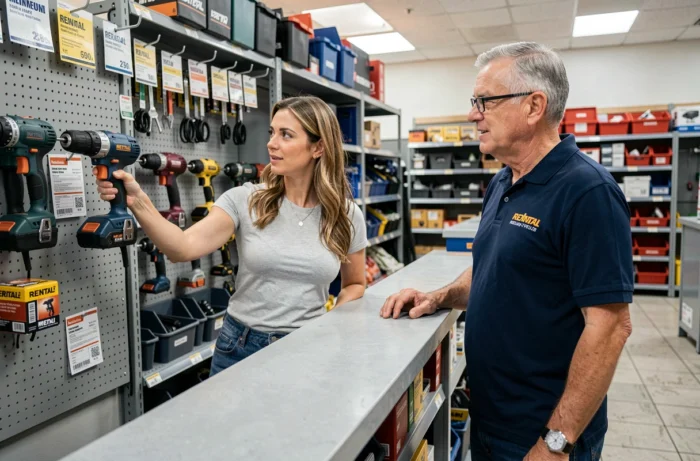
Daily Tool Rental: What the Displayed Price Doesn’t Always Reveal
The daily price of a tool is the visible part. However, several factors that increase the bill or, conversely, make the rental even more advantageous than it seems are often overlooked.
Deposit and Damage Insurance
With professional rental companies, a deposit is standard. It varies according to the value of the equipment and is paid via a bank hold or check. Damage insurance is sometimes included, sometimes optional. Among individuals, practices are evolving quickly: some platforms now include automatic coverage in the rental price, while others let both parties arrange it.
Checking the damage conditions before signing avoids unpleasant surprises upon return. A tool returned with a worn blade or a damaged hose may incur a deduction from the deposit if the contract stipulates it.
Actual Usage Duration and Decreasing Rates
Renting by the day does not necessarily mean 24 hours. Some rental companies count the day from 7 AM to 7 PM, while others offer the weekend at the price of a single day. Decreasing rates beyond the first day are common, making rentals over two or three days proportionally cheaper.
For a renovation project spanning a weekend (leveling on Saturday, installation on Sunday), it’s wise to check if the rental company offers a weekend package. One day paid for two days of use remains the most common offer among physical rental companies.
Choosing the Right Rental Tool for Renovation Work
You don’t rent a groove cutter like you rent a drill. The level of technicality of the equipment influences the choice of rental circuit and the preparation of the project.
- For common tools (drill, screwdriver, circular saw, orbital sander), renting between individuals or through a connected locker is usually sufficient. These tools are easy to use and do not require prior training.
- For heavier or specialized equipment (concrete mixer, jackhammer, scaffolding, drywall laser), a professional rental company provides a concrete advantage: usage advice at the counter and checking the condition of the equipment before departure.
- For landscaping equipment (gas hedge trimmer, brush cutter, scarifier), the question of transport arises. Rental companies offering home delivery simplify logistics, especially in urban areas without suitable vehicles.
Feedback varies on this point, but users of peer-to-peer platforms sometimes report uneven maintenance of the equipment. Checking the condition of blades, brushes, or hoses before leaving the pickup point remains a good habit.

Maintenance and Tenant Responsibility: The Rules to Know
Renting a tool does not exempt you from maintaining it during the rental period. Most rental contracts, whether professional or between individuals, stipulate that the tenant must return the equipment in the condition it was taken, clean and functional.
In practical terms, this involves simple actions: dusting off a sander after use, emptying the tank of a concrete mixer, properly rewinding a reel. A clean returned tool means a deposit recovered without dispute.
In case of a breakdown during the project, the reflex should be to contact the rental company before attempting a repair. Intervening on a rented tool can make the tenant liable if the handling worsens the problem.
Documenting the Condition of the Equipment at Pickup
Taking two or three photos of the tool at the time of pickup takes thirty seconds and can prevent a dispute upon return. This is especially useful on peer-to-peer platforms, where the reference condition is not always formalized by a release voucher.
Daily DIY tool rental has significantly diversified in recent years. Between traditional rental companies, commission-free local platforms, and self-service lockers, the choice of circuit depends as much on the type of tool as on the planned project. Before booking, the most cost-effective reflex remains to compare duration formulas and check deposit conditions, two parameters that often weigh more heavily than the displayed daily rate.