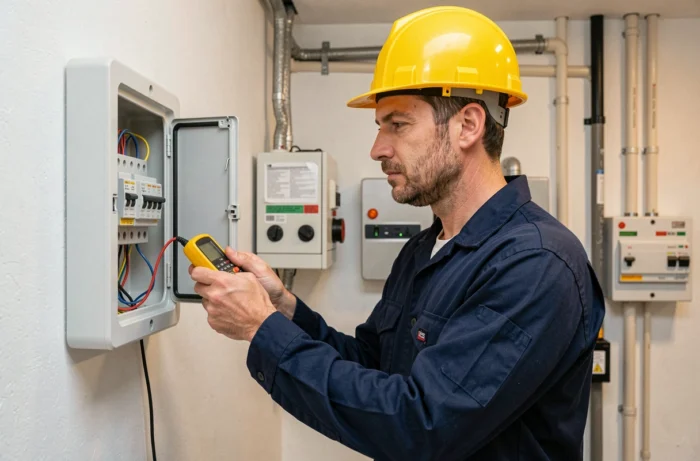
A circuit breaker that trips for no apparent reason, a socket that feels hot to the touch, a light that flickers in the hallway. These signals, often downplayed, indicate a fault in the electrical circuit. Attempting to intervene oneself on an electrical installation exposes one to real risks that most DIYers underestimate, and not just the risk of electrocution.
Electrical Diagnosis and Real Estate Transaction: A Often Ignored Legal Requirement
Are you planning to sell or rent a property? If the electrical installation is over fifteen years old, the electrical diagnosis is mandatory before the transaction. This requirement, reinforced by the gradual implementation related to the ALUR law, applies to both sales and rentals.
A certified diagnostician identifies the anomalies, but does not correct them. This is where a professional electrician comes into play: they interpret the report, prioritize the work, and bring the installation into compliance. Without this step, a property owner may find their sale blocked or their liability engaged in the event of a disaster.
The distinction that matters on the ground is not “old versus new,” but rather “existing installation versus major renovation project.” In the latter case, compliance with the NF C 15-100 standard becomes a contractual criterion, not just a technical reference. A qualified professional in this field, such as those listed on https://www.electricien-cymelec.fr/, can assist with these processes from diagnosis to compliance.
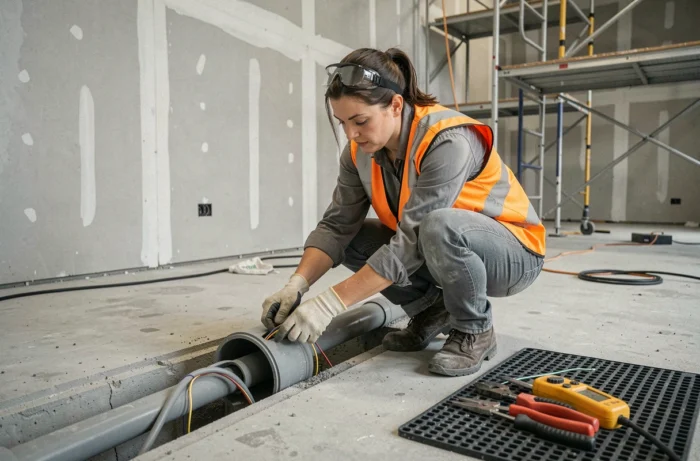
NF C 15-100 Standard: What It Specifically Requires During Renovation
The NF C 15-100 standard governs all low-voltage electrical installations in residential buildings. During a renovation, it sets precise requirements regarding the number of sockets per room, dedicated circuits for large appliances, differential protection, and the electrical panel.
Consuel Certificate: The Mandatory Step Before Powering Up
In new constructions, but also during a complete renovation of the network, powering up is conditional upon obtaining the Consuel certificate. This document certifies that the installation complies with the standard before the energy supplier powers it. Without the certificate, there is no electricity.
An individual carrying out their own work can request this certificate, but refusals are common. Wiring errors, an improperly sized panel, or the absence of an appropriate differential device can lead to the rejection of the application. Each visit from Consuel incurs a cost, as do any corrections.
Control Points Often Missed by Amateurs
- The cable section must correspond to the power of the circuit they supply. An undersized wire heats up in the conduit without visible signs, which can eventually trigger a fire.
- The safety volumes in a bathroom impose strict rules on the type of equipment allowed near water. A poorly positioned socket is enough to render the installation non-compliant.
- The electrical panel must have a reserve of modules (at least 20% of capacity) to anticipate future changes in the property.
A professional electrician knows these constraints by heart. They size the installation from the outset to avoid rework and additional costs.
Home Insurance and Electrical Compliance: The Link That Few See
Have you ever read the exclusion clauses in your home insurance policy? Most insurers stipulate a refusal of compensation if the damage results from an installation that does not comply with standards or was carried out by an unqualified person.
An electrically caused fire from a DIY installation can lead to a total denial of coverage. The owner then finds themselves alone facing property damage, or even personal injury.
Conversely, an invoice from a qualified electrician serves as proof of compliance. It details the work done, the materials used, and the reference to the applicable standards. In the event of a disaster, this document protects the owner with their insurer.
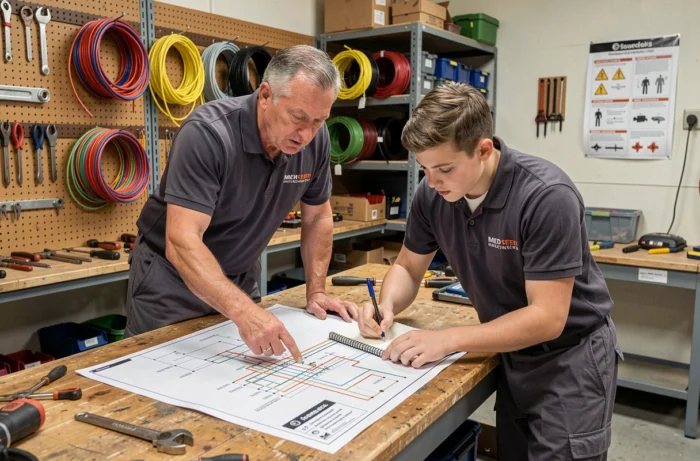
Common Electrical Work: The Line Between DIY and Professional Intervention
Replacing a switch with an identical one or changing a light bulb does not pose any particular difficulty. The dividing line lies elsewhere.
As soon as a job touches the fixed installation, a qualified electrician is necessary. This includes running new cables through walls, adding a circuit to the panel, installing additional sockets, or setting up an electric vehicle charging station.
The Case of Charging Stations
The installation of a charging station illustrates this boundary well. The dedicated circuit requires specific wiring, an appropriate circuit breaker, and often a load shedding device to prevent overloading the home network. A poorly connected charging station can damage the vehicle and degrade the entire installation.
A professional electrician assesses the capacity of the existing panel, checks the available power with the network operator, and sizes the circuit accordingly. This preparatory work avoids unpleasant surprises during the first charge.
Electrician Quotes: What You Are Really Paying For
The cost of a professional electrician covers much more than labor. A detailed quote includes the initial diagnosis, the sizing of the installation, code-compliant materials, commissioning, and legal guarantees (ten-year guarantee for structural work, guarantee of perfect completion).
- The preliminary diagnosis identifies the weaknesses of the existing network and allows for prioritization of the work.
- Certified NF materials ensure durability and compatibility with the NF C 15-100 standard.
- The ten-year guarantee protects the owner for ten years against defects affecting the solidity or rendering the work unsuitable for its intended use.
- The certificate of compliance provided after the work simplifies procedures with the insurer and Consuel.
Comparing a professional quote to just the price of supplies purchased at a big box store overlooks the value of safety, compliance, and guarantee. The true cost of a poorly executed electrical installation is measured after the disaster, not before.