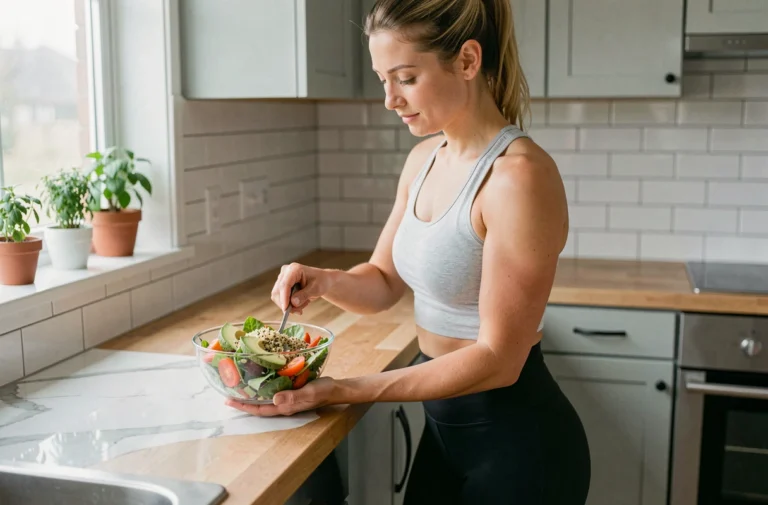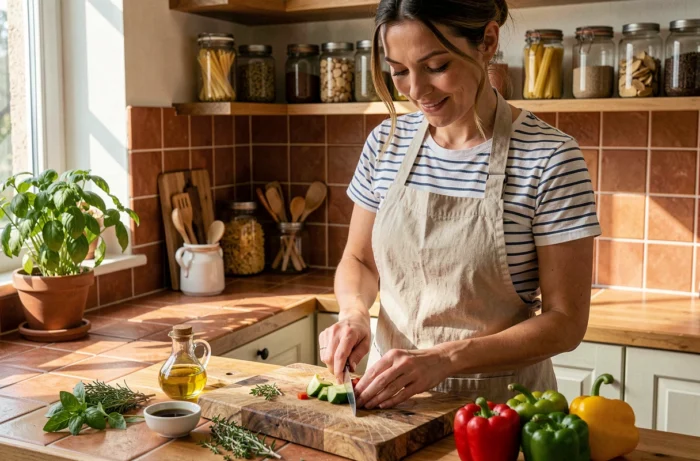
Home cooking refers to the act of preparing meals from raw or minimally processed ingredients, mastering each step of the preparation. This practice allows for control over the amount of salt, fats, and additives in one’s diet. The National Strategy for Food, Nutrition, and Climate 2025-2030 (SNANC), published on April 4, 2025, also places the development of basic culinary skills among its priority guidelines to reduce the consumption of ultra-processed products.
Decision Fatigue: The Real Barrier to Everyday Cooking
Lack of time consistently appears in surveys about eating habits. However, the problem often lies upstream of cooking itself: choosing what to prepare, checking what is left in the refrigerator, improvising a shopping list. This decision fatigue pushes people towards prepared meals or delivery, even when the actual cooking time for a simple meal does not exceed twenty minutes.
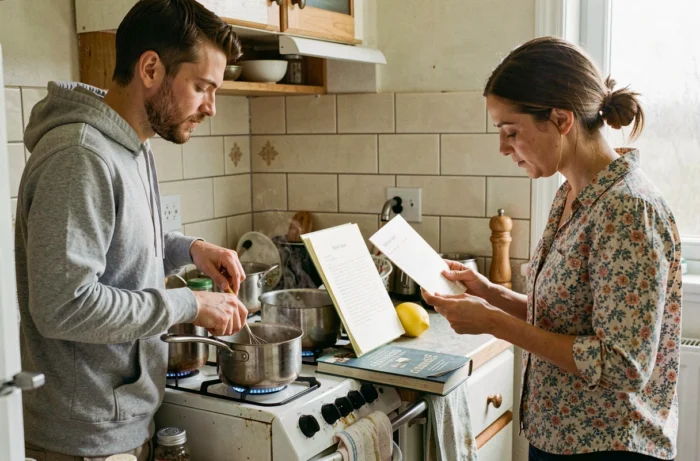
Reducing the number of decisions to make each day changes the game. Planning three or four meals in advance in a notebook or an app is enough to eliminate the question “what are we eating tonight.” The benefit is not only organizational: when the menu is decided, shopping becomes targeted, and food waste decreases.
Those who enjoy varying their meals while maintaining a framework find support in tools that offer recipe ideas tailored to their tastes. When we say I love cooking with Myn Idee, it is precisely this reduced mental load that makes a difference in daily life.
Strategic Pantry: Foods to Always Have at Home
A well-stocked pantry transforms improvisation into a decent meal. The goal is not to stock up in bulk, but to maintain a stable base that covers several types of dishes.
- Dry or canned legumes (lentils, chickpeas, red beans): rich in fiber and plant protein, they pair well with almost all seasonal vegetables and cook without active supervision.
- Whole grains (brown rice, semi-whole pasta, couscous): their lower glycemic index compared to refined versions prolongs satiety and limits mid-day snacking urges.
- Various vegetable oils (canola, olive, walnut): canola and walnut oil provide omega-3s, while olive oil is better suited for cooking at medium temperatures.
- Basic spices and herbs (cumin, paprika, herbs de Provence, garlic): they allow for varying flavors without adding salt, a reflex that nutritionists consistently recommend.
With these four categories in stock, most everyday recipes become feasible without last-minute shopping. The rest, fresh vegetables, eggs, cheese, can be completed in a single weekly visit.
Cooking and Utensils: Simplify Rather Than Accumulate
The proliferation of kitchen utensils creates an illusion of productivity. In practice, three containers cover the majority of home cooking: a medium-sized skillet, a thick-bottomed saucepan, and a baking dish. Adding an immersion blender allows for preparing soups and sauces without additional dishes.
The choice of cooking method directly influences the nutritional value of foods. Steaming preserves more vitamins in vegetables than prolonged boiling in a large volume of water. Moderate oven cooking is suitable for vegetable gratins and proteins, without requiring added fats.
The Trap of Long Cooking
Many people associate home cooking with slow-cooked dishes that take several hours. This representation is discouraging. However, a large portion of balanced meals can be prepared in less than thirty minutes: whole grain pasta with sautéed vegetables, a lentil salad, a filled omelet. Reserving long recipes for the weekend and relying on quick preparations during the week makes the approach sustainable over time.
Home Cooking After Inflation: A Sustainable Budgetary Reflex
The inflationary episode of 2022-2023 has profoundly changed the food choices of French households. The Bank of France emphasizes that the effects of this period are still perceptible: households’ feelings about the cost of living remain high even when indicators stabilize. This budgetary pressure has pushed a significant portion of the population to reduce restaurant outings and orders for prepared meals in favor of home cooking.
This movement is not just a temporary trend. The habit of cooking one’s meals takes root when the price gap with buying ready-made dishes becomes visible. A basket of raw products, vegetables, grains, proteins, covers more meals than an equivalent budget spent on industrial dishes or delivery. The calculation becomes evident after a few weeks of practice.
Storage and Anticipation to Limit Waste
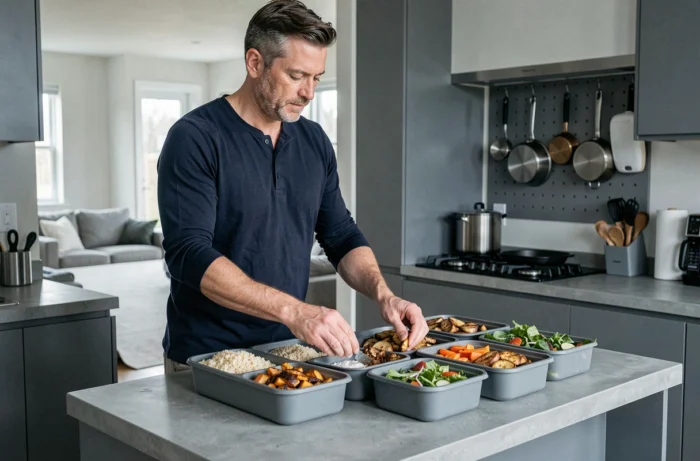
Preparing extra portions and storing them in the refrigerator or freezer allows for homemade meals on days when energy is lacking. A few storage rules are enough:
- Cooked dishes can be stored for two to three days in the refrigerator in airtight containers.
- Freezing is suitable for soups, sauces, cooked legumes, and most saucy dishes. Salads and raw vegetables do not withstand this treatment.
- Labeling each container with the preparation date prevents losses due to forgetfulness, one of the primary factors of domestic food waste.
The SNANC 2025-2030 mentions the promotion of short supply chains and everyday cooking as a lever for food sovereignty. Regularly cooking at home contributes to this collective goal while addressing individual health and budget control. The last obstacle often remains the first step: choosing a simple recipe, opening the pantry, and starting.